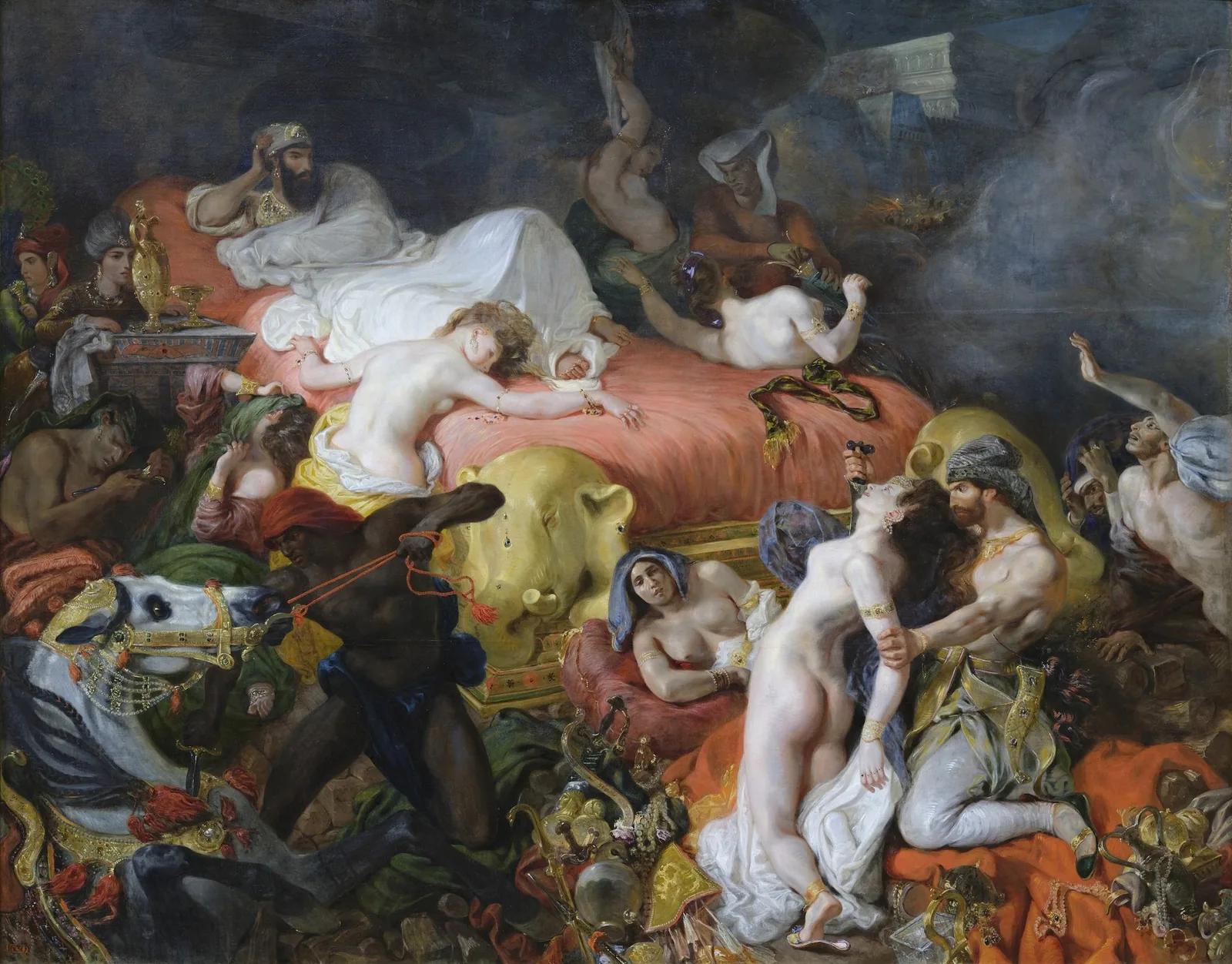
The Death of Sardanapalus, Eugène Delacroix, 1827

Romanticism · 1827

The Death of Sardanapalus

Eugène Delacroix 1798–1863

The Louvre · Paris

An Assyrian king reclines unmoved on his crimson pyre as servants slaughter everything he loved, a Romantic cascade of bodies, horses and gold.

Watch the story

The story of The Death of Sardanapalus

Watch the first minute here. The full film, with the painter, the history and a close reading of the details, is in Hear Art.

Free preview · first minute

Look closer

Choose a detail to move in close. The film reads every one of them aloud.

Chapter 1 of 6

A King's Last Order

Look at the chaos pouring across this enormous canvas, nearly four metres wide. Eugène Delacroix painted it in 1827, loosely inspired by Byron's tragedy of an Assyrian king who, facing defeat, ordered everything he loved destroyed before he died. The king reclines at the top, calm as a god, while a torrent of bodies, horses and gold cascades toward you.

Critics at the Salon were appalled by its violence and its tumbling, off-balance composition. Notice there is no still centre, only a great red diagonal sweeping everything down into ruin.
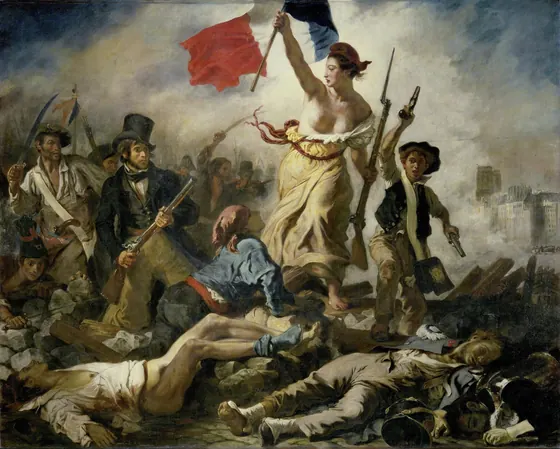
Where to see it

The Louvre

Paris

Room 700 · Salle Mollien · Level 1 · Denon wing

The Hear Art 3D museum guide walks you to it.

Public domain image via Wikimedia Commons.

More by Eugène Delacroix

More at the Louvre

Hear the whole collection.

119 masterpieces, each with its own film, in eight languages. Ten are free; one purchase unlocks the rest. No subscription.